Comets.
11 photographs
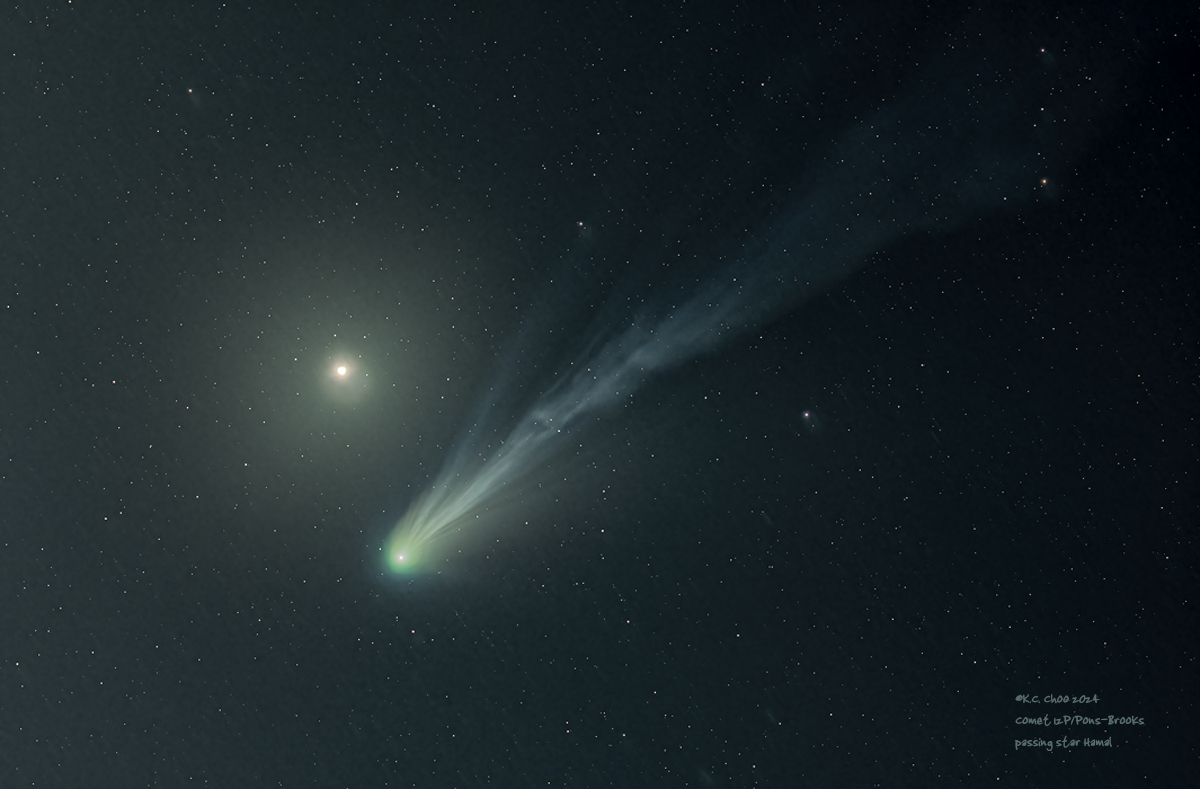
Comet 12P/Pons-Brooks is a periodic comet having an orbital period of 71 years, and was one of the brightest ones. I managed to capture this with my telescope from home, thus I was able to track it and integrate a number of single frames to get detail on its tail. It was swinging by the star Harmal that evening.
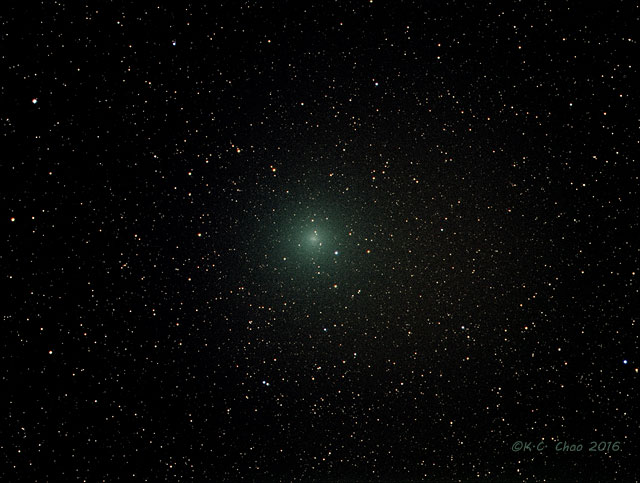
This Comet appeared in our Northern skies in April 2016. LINEAR is an acronym for Lincoln Near Earth Asteroid Research, an MIT Lincoln Laboratory program funded by the U.S. Air Force and NASA. Its team discovered Comet 252P on April 7, 2000.
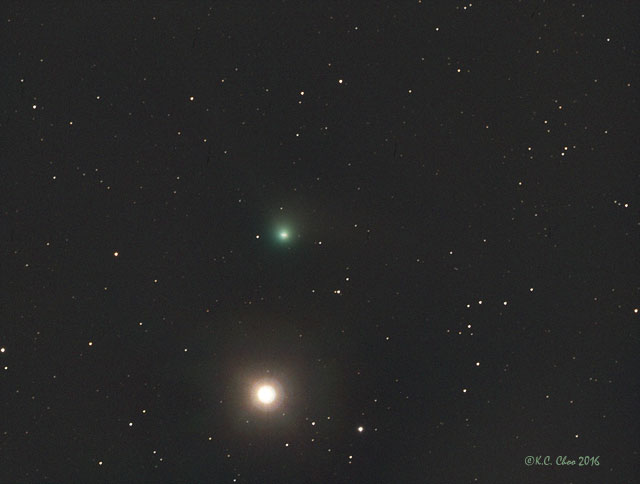
This Comet is relatively new and came into view as a New Year's Comet, and I managed this image on January 3, 2016. It had just swept by the bright star Arcturus.

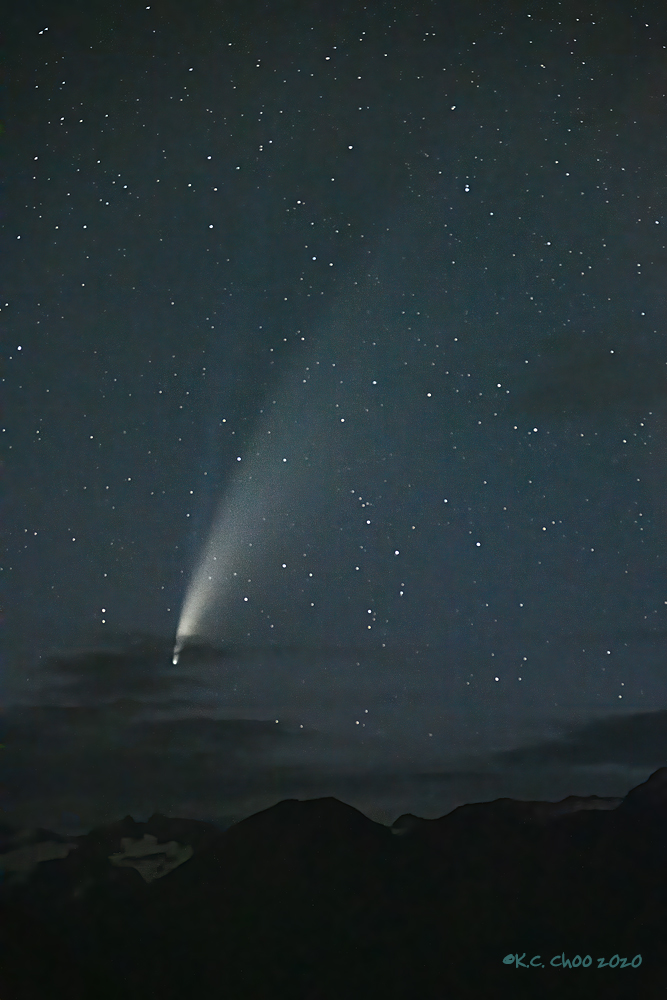
This Comet was a wonderfully bright Comet, easily visible to our Northern Hemisphere eyes. Its orbital path is so huge that some 6,800 years will pass before it returns to our inner Solar System. It survived its close swing by our Sun and became very bright, affording us many nights of viewing and photographing,
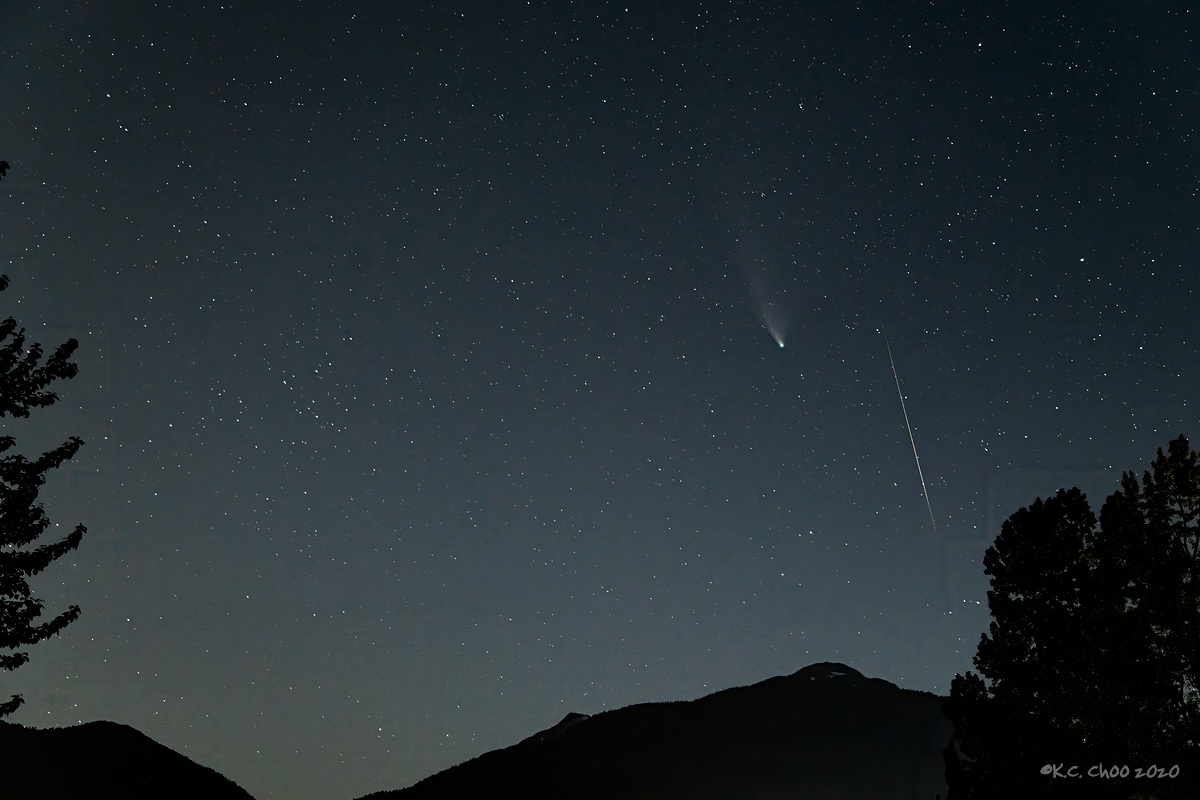
Comet and Meteor
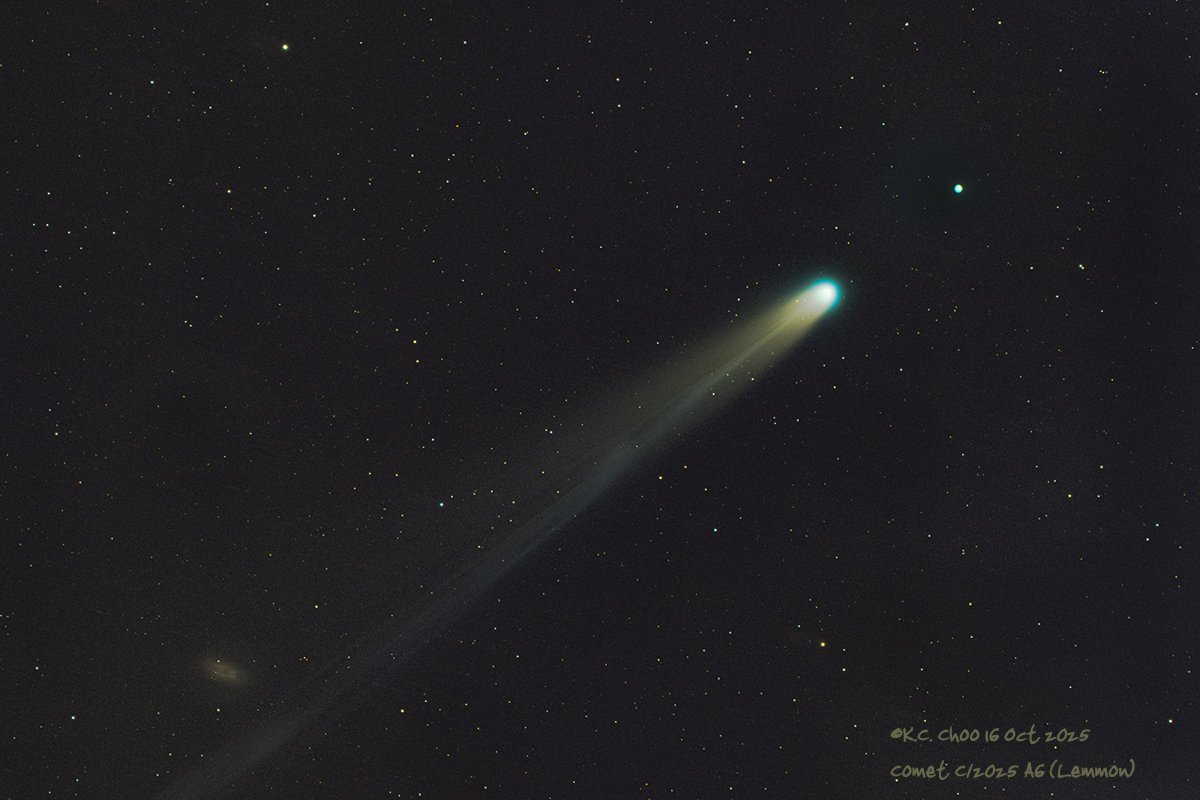
Showing its main Tail and a faint Blue Ion Tail

The bright Star on the lower right part of the starry sky is Arcturus.
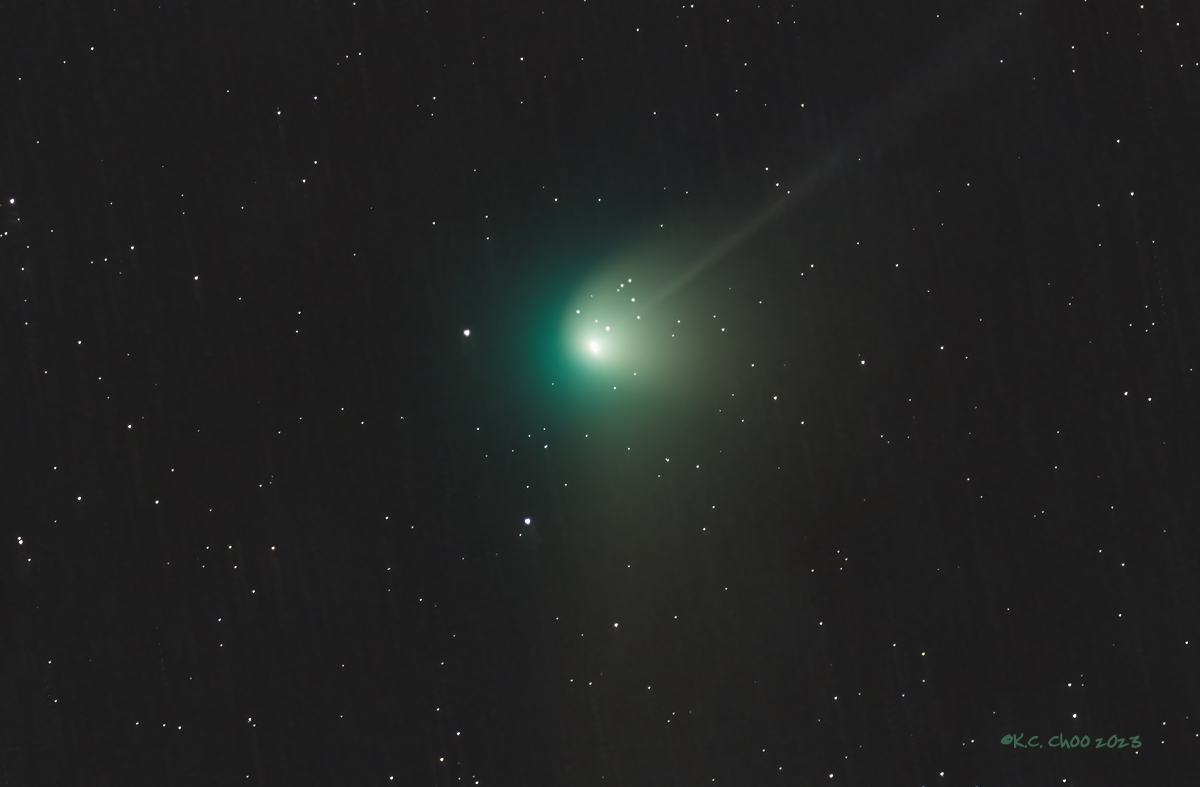
Another long period Comet that orbits the Sun once every 50,000 years.

When this Comet came into view in our skies, the clouds simply would not move away for many nights. When it finally did for a very short period, I managed to grab a shot.
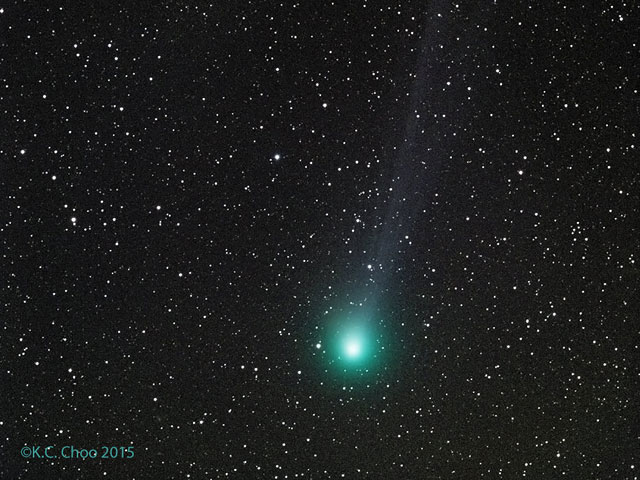
Discovered by Terry Lovejoy in August 2014 from Brisbane, Queensland. This is my first attempt at photographing a Comet, and I was surprised to find it moves very quickly across the sky. After several trial and error attempts, I finally found one solution, and I am quite pleased with this result using a Vixen VC200L telescope and SBIG STT-8300M camera on January 31st, 2015, one night after it reached perihelion (nearest the sun).