Nebulae.
38 photographs
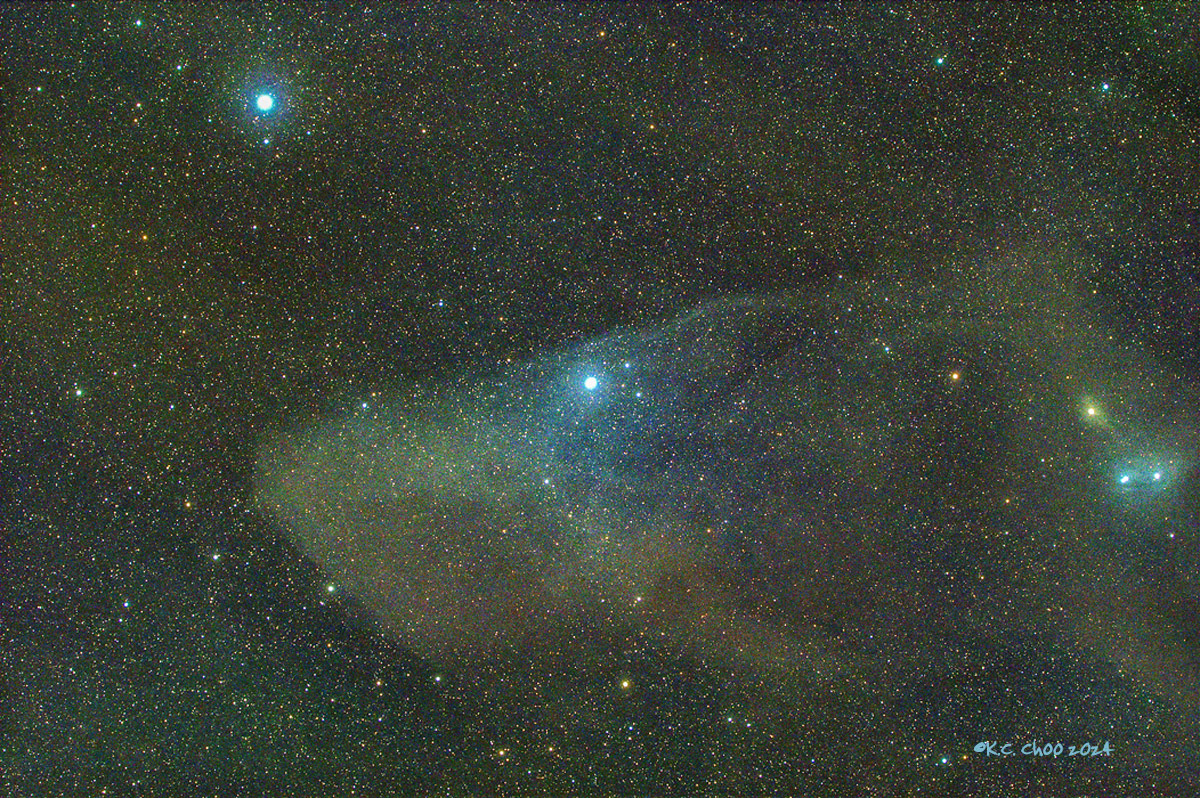
A summer project for Northern Hemisphere observers and astrophotographers, this is another one I am particularly proud of, it being a Reflection Nebula, faint and low in the sky close to the Rho Ophiuchi Complex (please see below). This Deep Sky Object lies some 910 light years away.
Askar PHQ65, Zwo AM5 mount, Pixinsight and Photoshop.
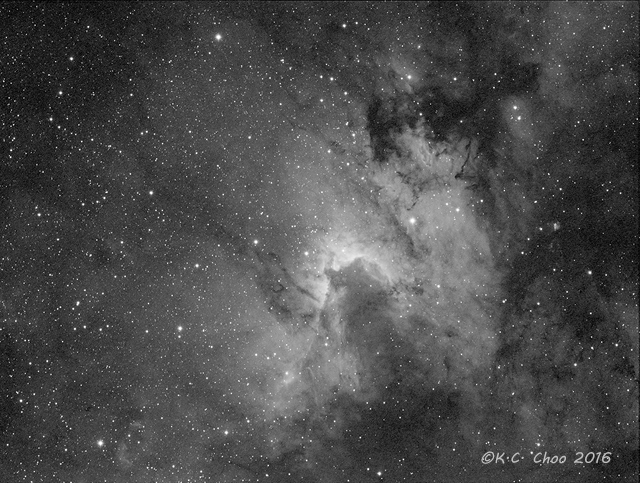
Another faint Hydrogen-alpha emission nebula in the constellation Cepheus. It lies about 2,400 light-years away. This image in Hydrogen alpha is an integration of 4.5 hours of exposure.
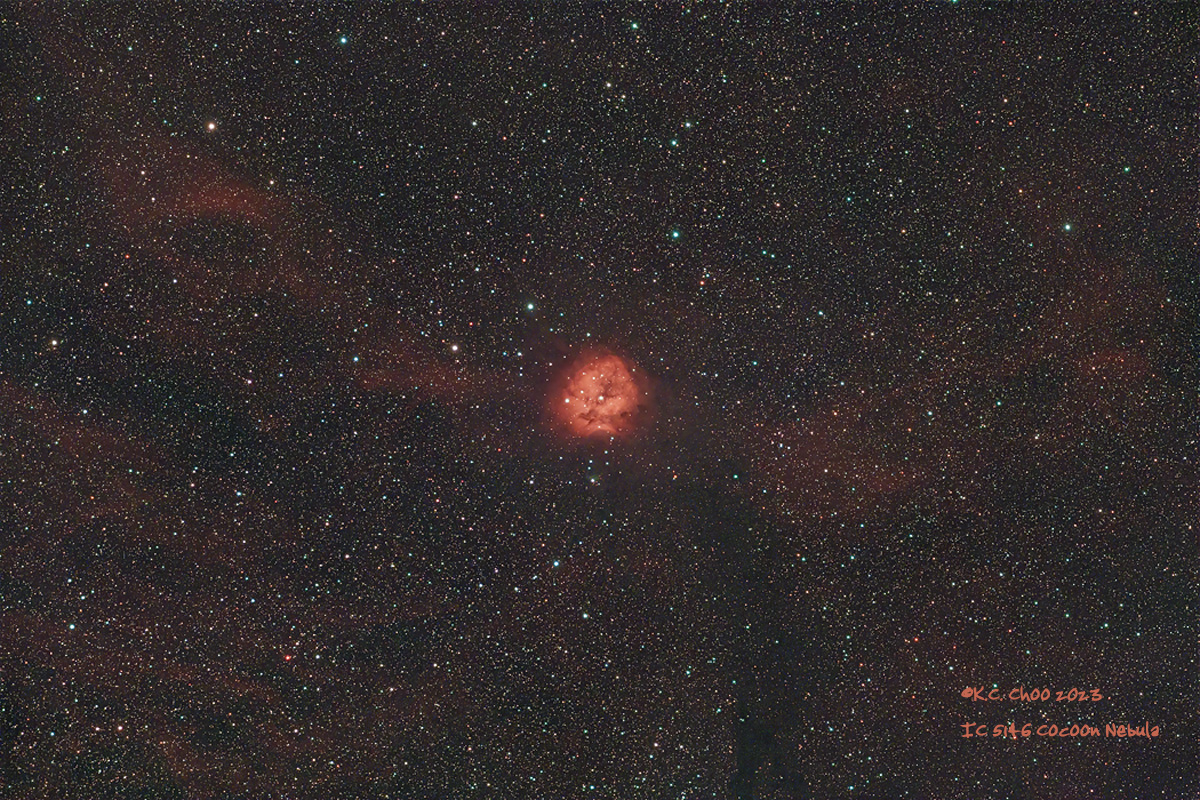
This beautiful emission nebula is about 4,000 light-years away in the Cygnus constellation. The dark nebula Barnard 168 forms the dark lane that surrounds the cluster and forms the trail behind the Cocoon. This is and integration of just over 5.5 hours of exposure captured with the ASKAR PHQ65 wide-field telescope and ZWO AM5 Mount and ZWO's ASI2600MC colour camera.
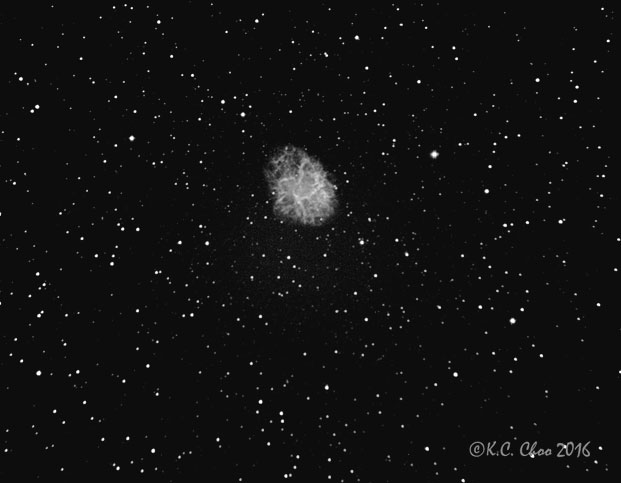
A supernova remnant that the Chinese astronomers first noticed in 1054, before William the Conqueror. It was seen in daylight for 3 weeks then. Comparisons of the Crab, lying some 6,300 light-years away, from photographs taken decades apart show it is expanding very quickly, at about 1,800 km/sec. In the centre of the Crab is a very fast spinning neuron star, rotating at about 30 revolutions per second! This is an Ha integration of 11 x 600 sec sub-frames. I can easily improve on this one in the
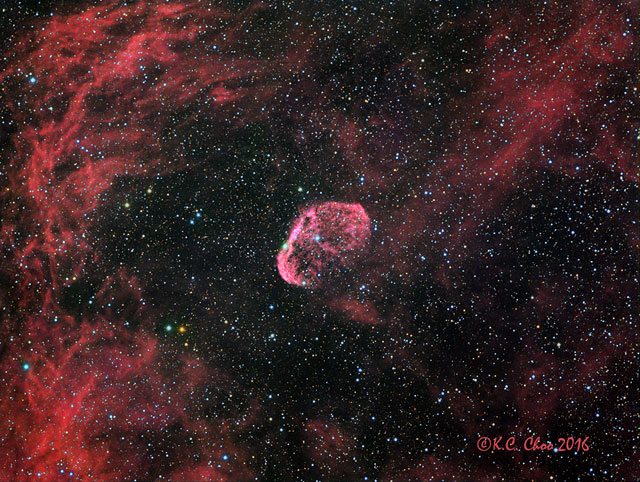
An emission nebula in the constellation Cygnus, about 4,700 light years away. Many Milky Way stars shine through the nebula. An HaRGB integration of 11 x 30 min Ha, 5 x 6 min each of Red, Green Blue filters, total exposure 7 hours.
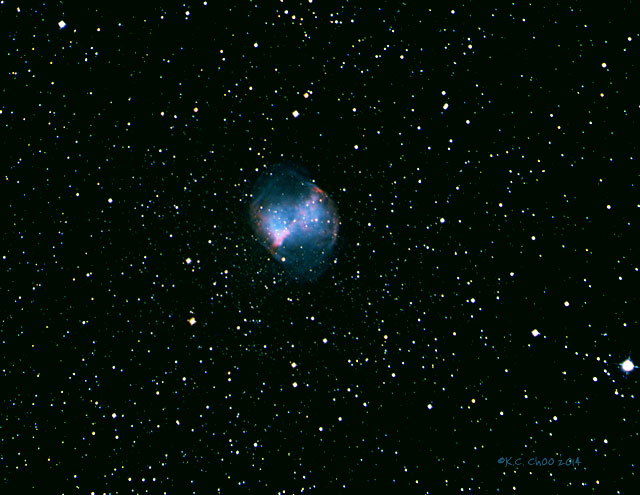
This is the first Planetary nebula ever discovered by Charles Messier in 1764. It seems the distance to M 27 is not known and estimates range very widely from 490 to 3,500 light years away.
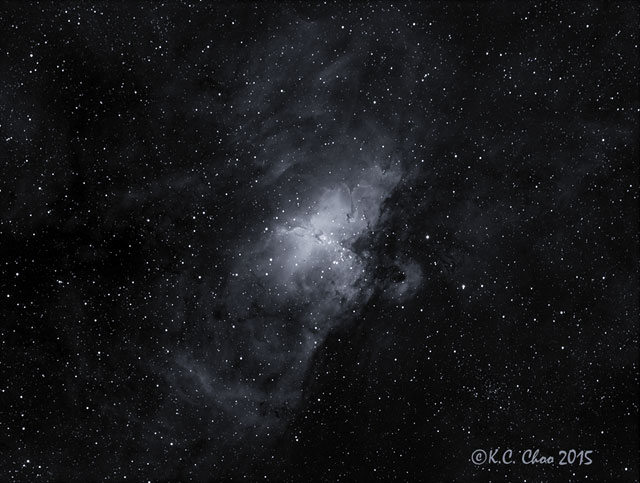
Famous for its Pillars of Creation from the Hubble Team, this deep sky object is difficult for me to capture because of its low altitude and position in the southern sky. Hence, I only have 5 x 1800 seconds of HA filtered data to work with. It is estimated to be about 7,000 light years away.
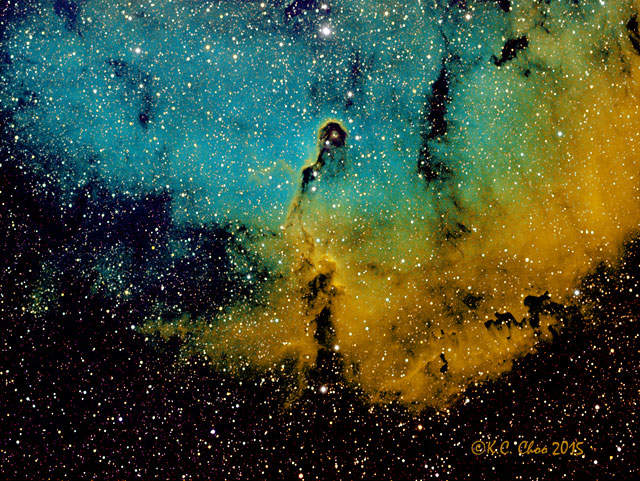
Called the Elephant Trunk Nebula for very obvious reasons; again, another example of the heavens having an object that appears very familiar to us Earthlings! This nebula is approximately 2,400 light-years away from us. IC 1396 is itself very large. I have processed this in the classic Hubble Palette method to produce the often seen gold and yellow colours. Ha = 10 hours, OIII and SII = 5 hours each.
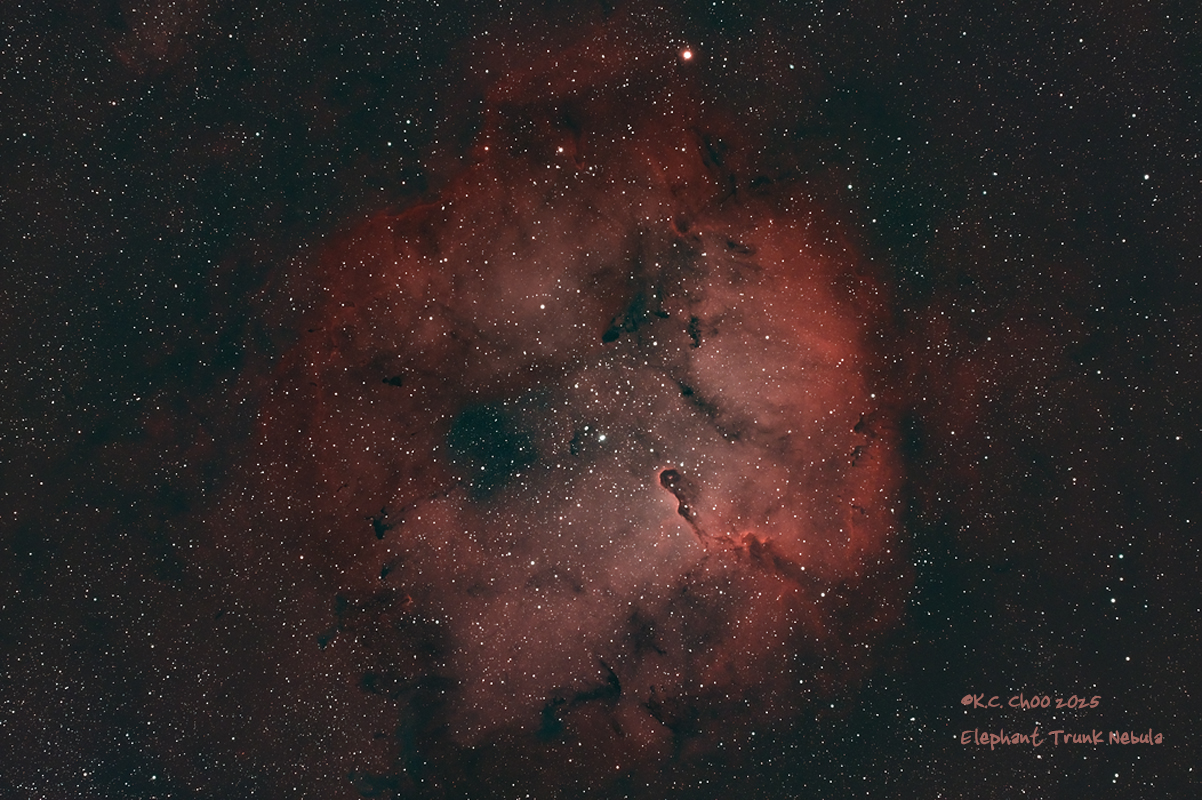
This is a wide-field image of the Elephant Trunk Nebula captured with a ZWO ASI2600MC colour camera,
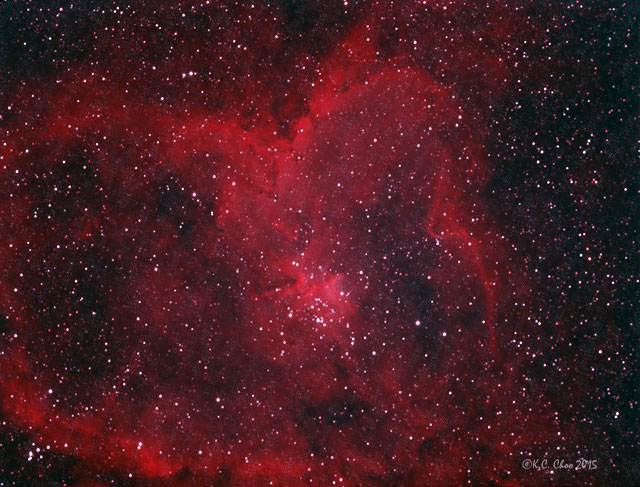
An emission nebula about 7,500 light-years from us shows glowing ionized hydrogen gas. I have only managed Ha and OIII sub-frames totalling 7 hours of exposure at this time, and hope to add SII filtered data later. Part of the Heart and Soul combination of two nebulae in the constellation Cassiopeia in our northern sky, the familiar "W" formation we see so well.
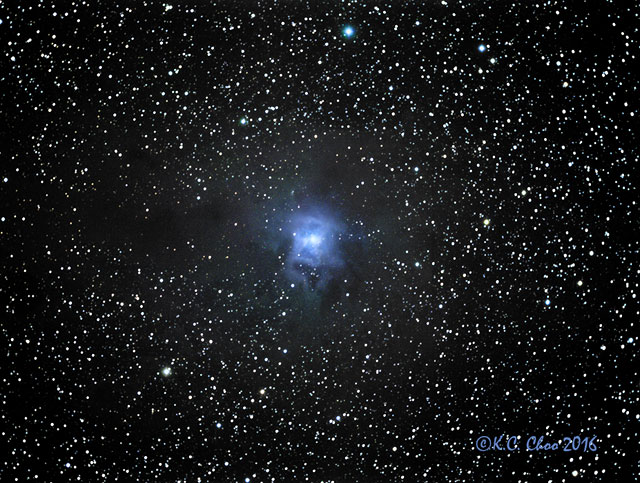
A rather delightful reflection nebula in the constellation Cepheus, some 1,300 light-years away. I am quite pleased with this LRGB combination as it shows the cold dust around and to the left of the nebula, blocking the light from stars that are behind it. I would have thought that very dark skies would have been a necessity for the dust to show. This image is an integration of RGB sub-frames gathered in the fall of 2015 and Luminance subs in 2016.
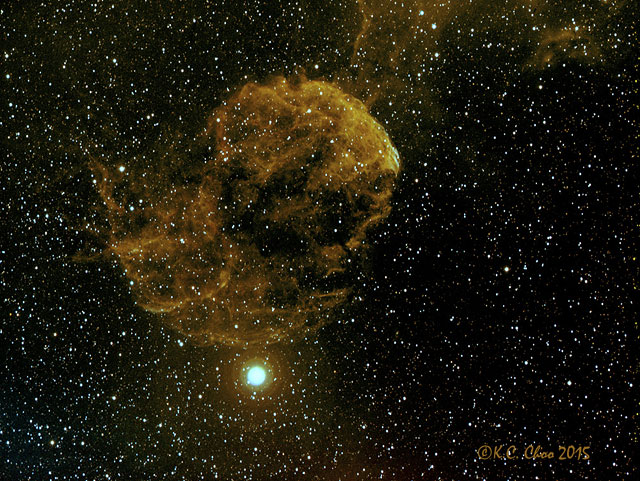
Another supernova remnant that is 5,000 light-years from Earth. The bright star seen, Eta Geminorum, is much closer to us, of course, about 350 light-years away. The shape is unusual for a supernova and so is much studied by scientists. This is an integration of 8 x 1800 sec Ha, 6 x 1800 sec each of OIII and SII sub-frames. I processed this using the Hubble Palette combination.
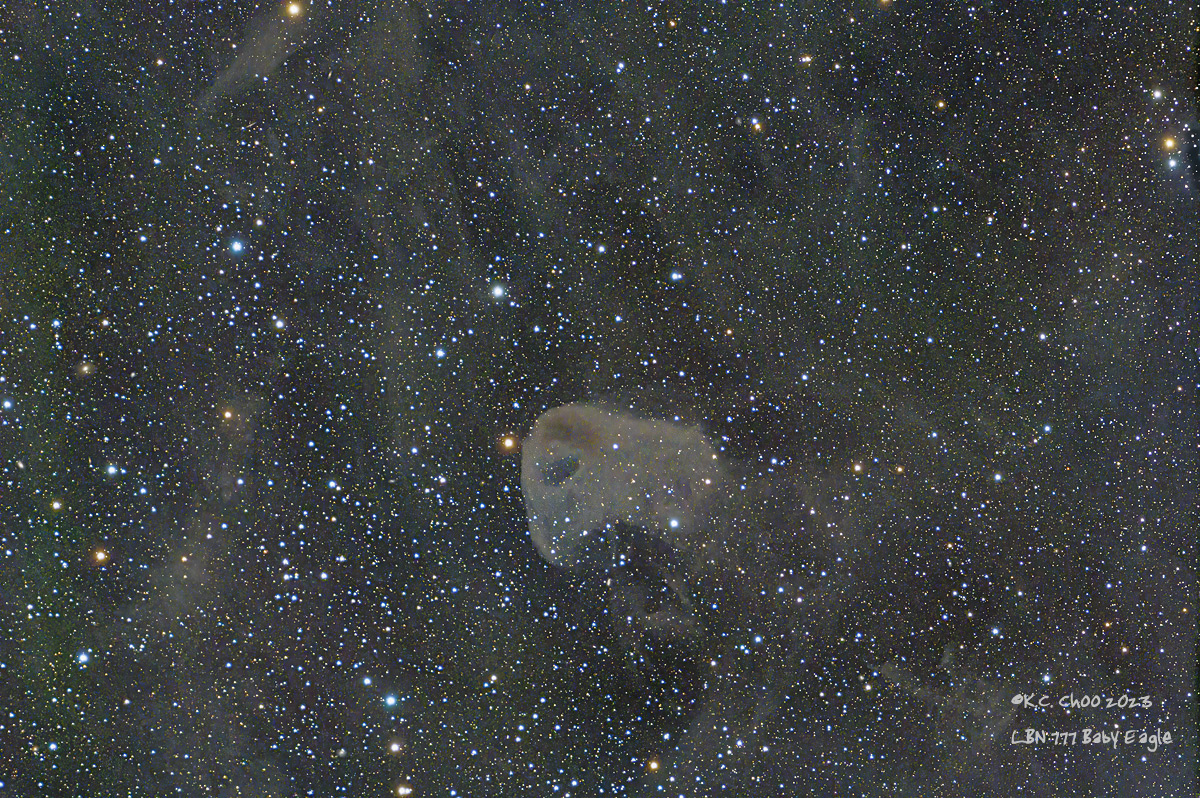
An extremely faint dark nebula, the Baby Vulture is only about 5 degrees north-east of the famous Pleiades cluster of stars (M45). I had been keen to capture this very faint object for a while, and I was somewhat taken aback, when I attempted to do so in the summer of 2016, that I actually got something. Since then I was able to collect just over 8.6 hours of data with the ZWO ASI2600MC colour camera, and I was delighted with the result.
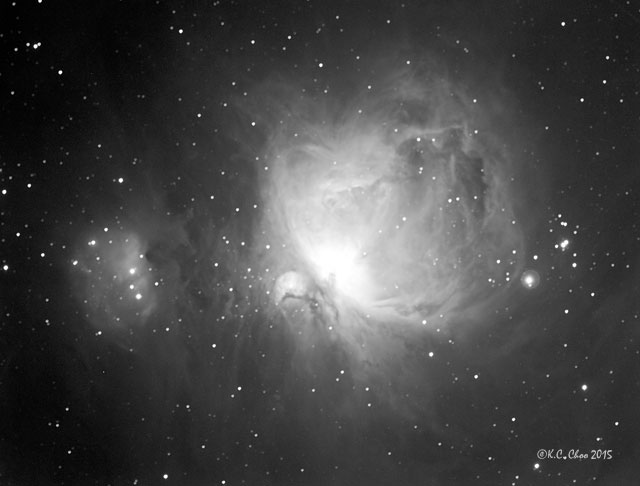
Located just south of Orion's Belt, this appears as a fuzzy patch to the naked eye. M42 is a fine example of a diffuse nebula in the sky, shining at 4th magnitude. It is a mere 1,350 light-years away, close in comparison to the others that are included on this webpage. It is therefore the closest massive star formation in the Orion Nebula. The Running Man can be seen in the fainter object to the left. I have not been able to bring the Man out more in post processing (as yet!). 7 x 1800 sec Ha ex
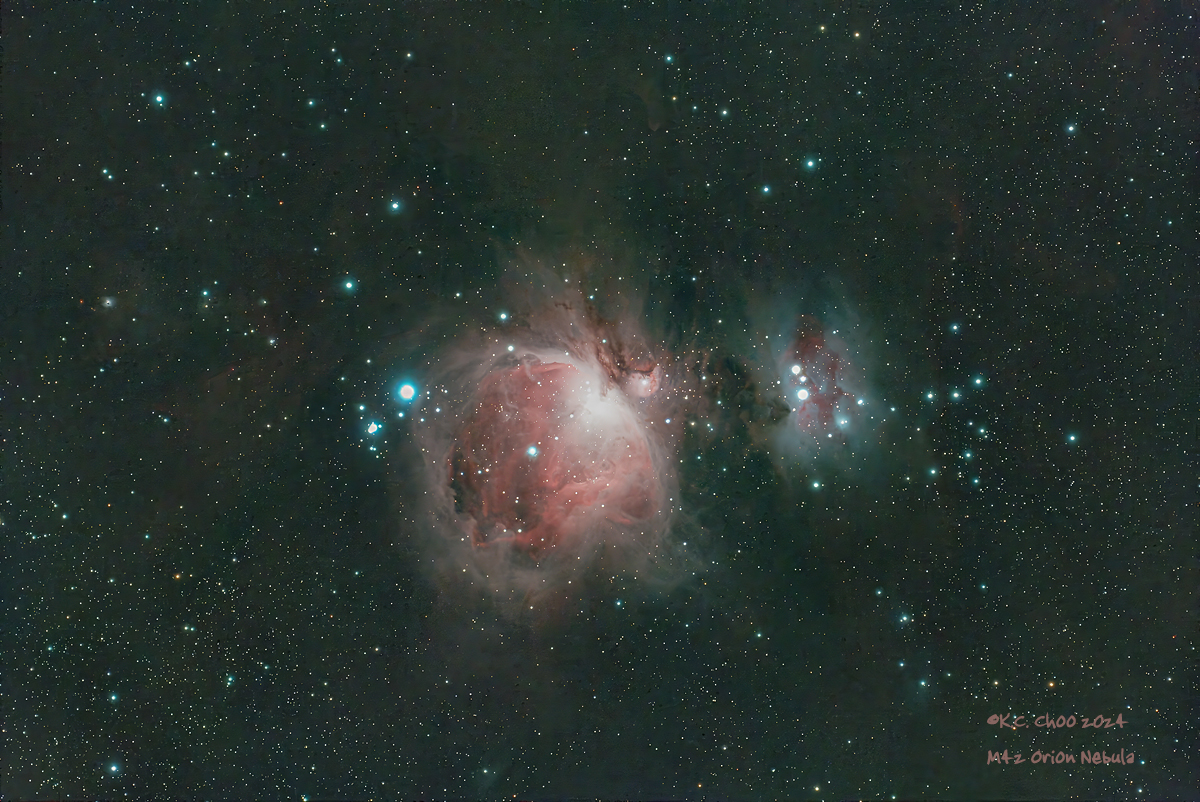
Here's a much later capture of the Orion Nebula and Running Man with the Askar PHQ65 refractor with ZWO ASI2600MC colour camera.
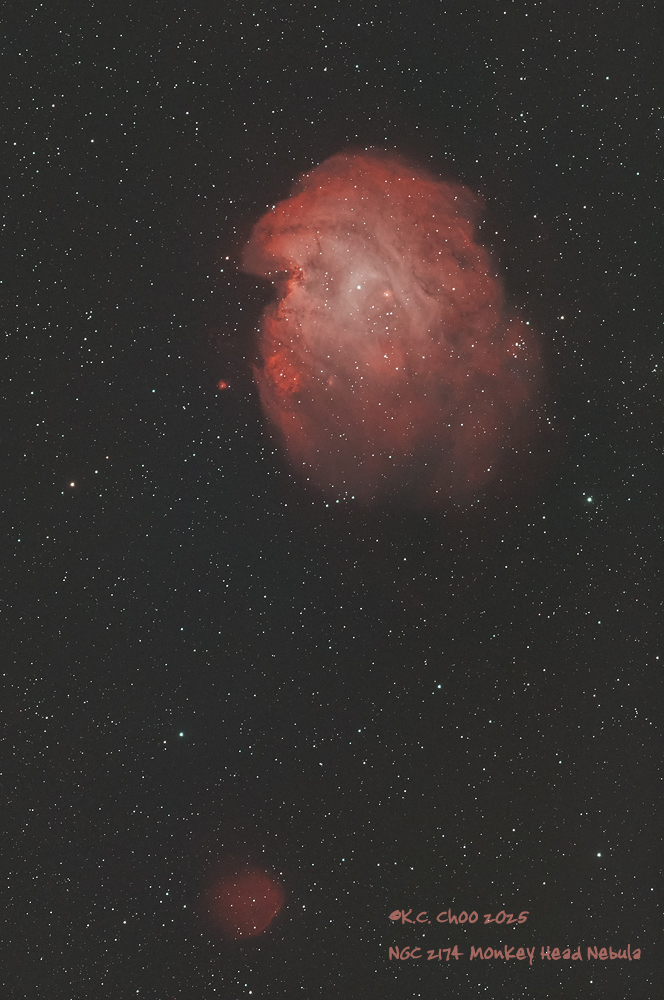
As the name suggests, it has an uncanny resemblance to one of our earthly primates. 6,400 light-years away, it lies in the constellation Orion. I used the ZWO ASI2600MC colour camera to get this colour image.
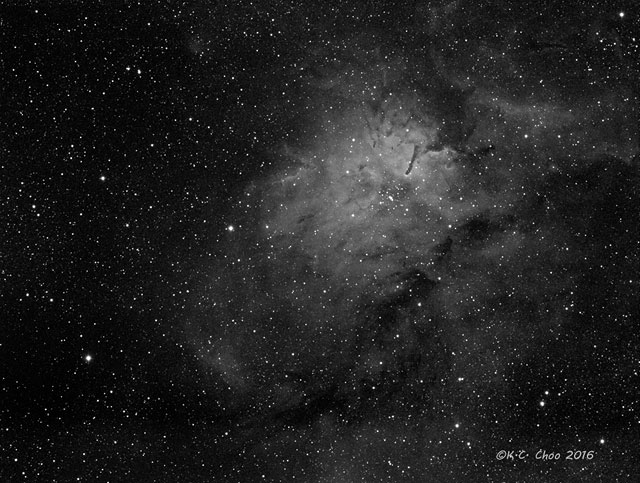
A 15th magnitude bright nebula in the Constrllation Vulpecula, it is very faint but when imaged through a Hydrogen alpha filter, there is a lot going on. Estimates have it about 6,000 light years away. 7.5 hours of integration of 1800 seconds exposures.
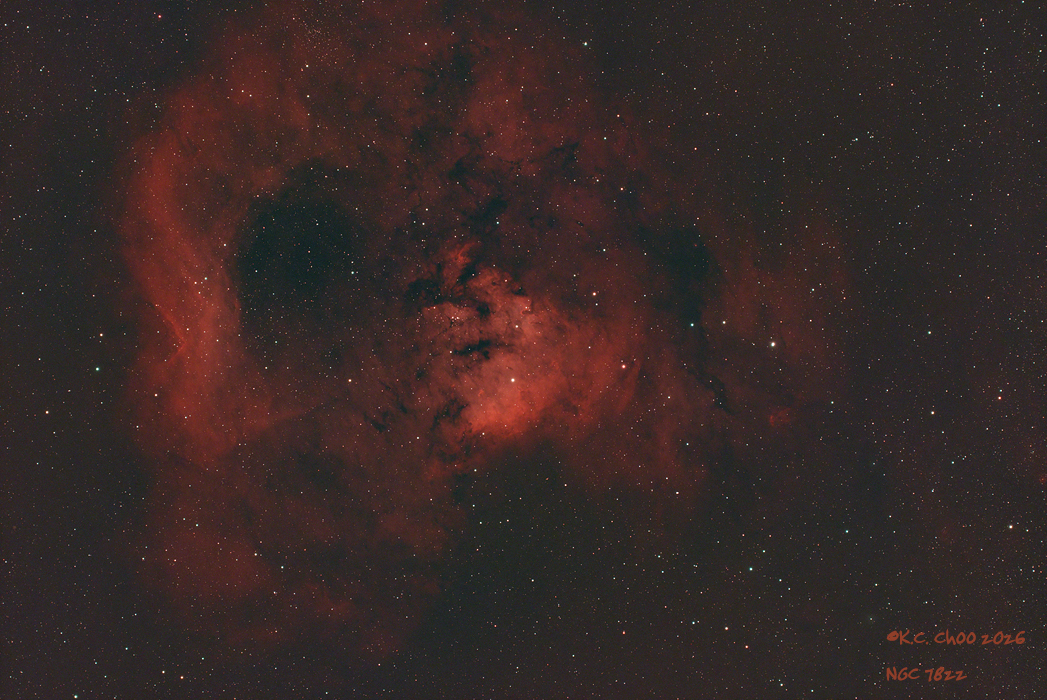
This Emission Nebula in the Constellation of Cepheus is about 3,000 Light Years away. It is an integration of 60 x 5 minute subframes of data collected on the night of August 24, 2026, post processing in Pixinsight and Photoshop 2026. The Nebula is also known as The Question Mark Nebula.
Askar PHQ65 Refractor - ZWO AM5 mount - ZWO ASIair Plus
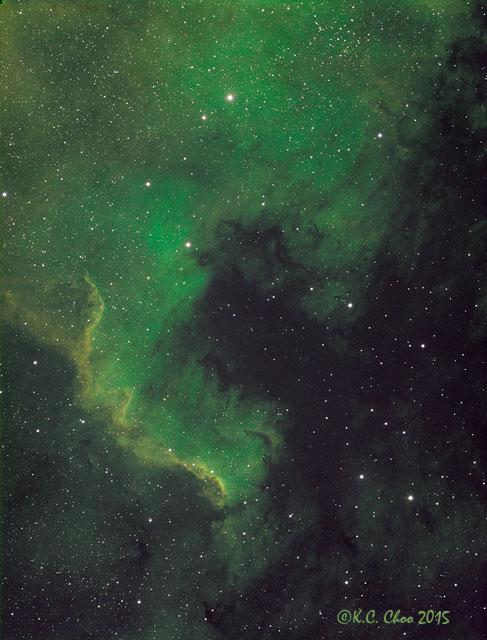
An emission nebula in Cygnus close to the star Deneb, it is as large as four full moons in the sky. William Herschel discovered it in 1786 from Slough, England. With the development and light pollution today in Slough, I'd think no further deep sky object will likely be discovered from there again! The Pelican Nebula is close by, just beyond the lower right corner, and often we see wide-field presentations of the two nebulae. This is a combination of Ha, OIII and SII subs. I have used the Hubble
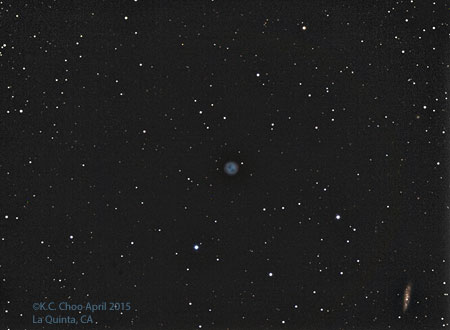
A planetary nebula in the constellation Ursa Major that attracted me immediately on taking up astrophotography was this Owl Nebula. There are many 'birds' in the skies and Owls are one of my favourites to photograph. M108, a barred spiral galaxy is seen at lower right. The galaxy is some 45 million light-years from us, whilst the Owl Nebula is roughly 2,600 light years away. This is an integration of 190 minutes of LRGB subs.
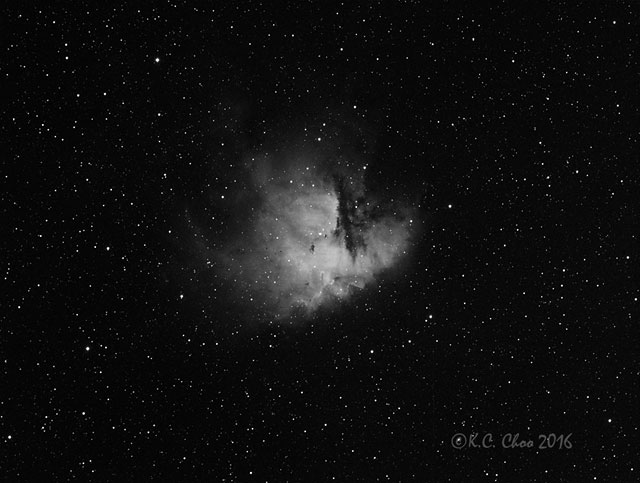
So named because of its resemblance to the very successful arcade game, this is an area of Hydrogen gasses in the constellation Cassiopeia, the 'W' formation in our northern sky. It is quite far away being some 10,000 light-years distant from Earth. The brightest star in the midst of the nebula is HD 5005, which helps ionise the nebula's gas. Once I add RGB subs to this we shall be able to see its red colour. Here, I have only had time for 2 x 1800 sec subs; hence, the quality of this stack is n
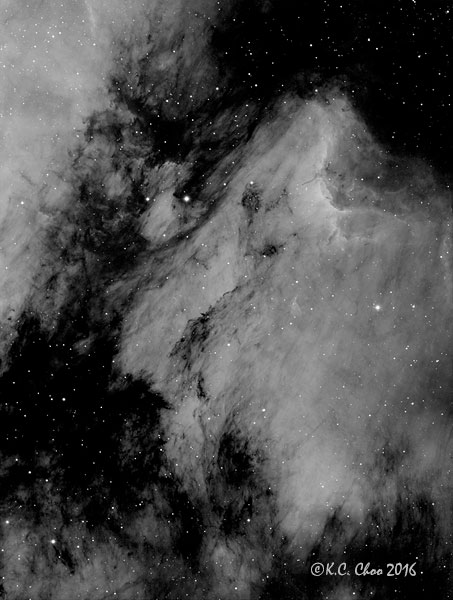
A very bright and large emission nebula in Cygnus, the Swan. This is yet another 'bird' in the sky, and was the first bird that I aimed my telescope at. Very close to the North America Nebula, it lies about 2,000 light-years away and has a linear diameter of about 30 light-years. I was able to re-shoot this in 2016 but only did 5 1/2 hours of exposure with the HA filter. See next image for colour. But, RGB data will be collected at a later time.
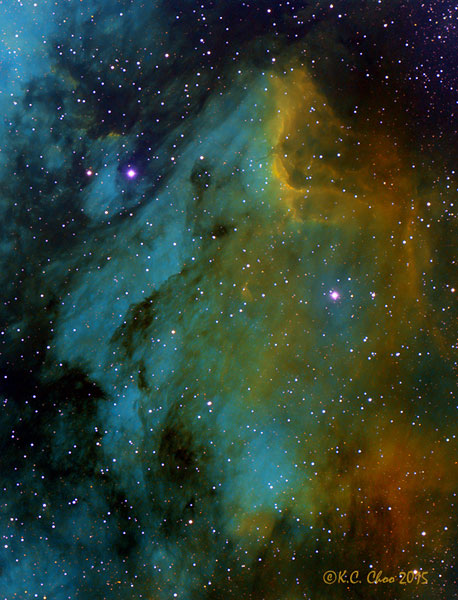
This is processed in the Hubble Palette style. It provides a different look to The Pelican Nebula.
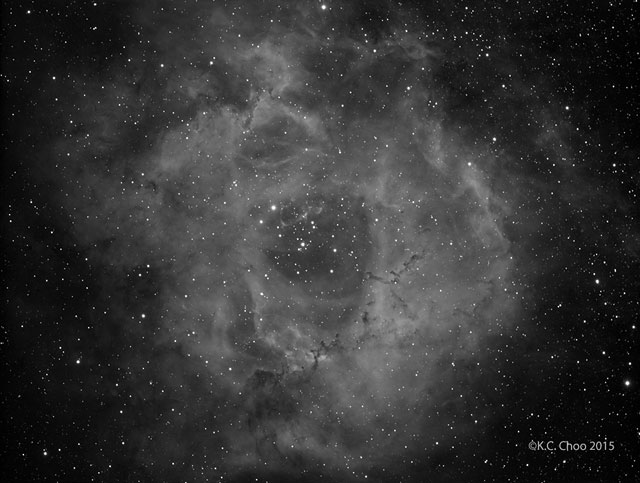
In Ha, this was imaged through my 4 inch refractor telescope, the Stellarvue SVQ100, which has become my regular telescope for this hobby. As you can see, the field of view with this astrograph is perfect for this object as it almost shows the whole nebula. I don't have the data for the colour elements as yet. Each and every target becomes an ongoing project that requires revisiting again and again, I have come to realise.
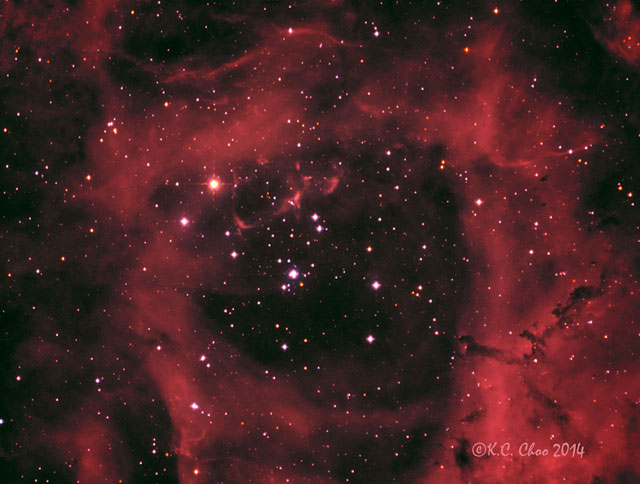
From my first telescope, the Vixen VC200L 8 inch reflector, this circular emission nebula in Monoceros was one of my first deep sky objects I aimed my telescope at. It is roughly 5,200 light-years from us in a region that is Hydrogen gas filled, hence the red colour shown. Note the "Panther leaping" into the tunnel at about 4 o'clock. Another earth-like being lurks in outer space!
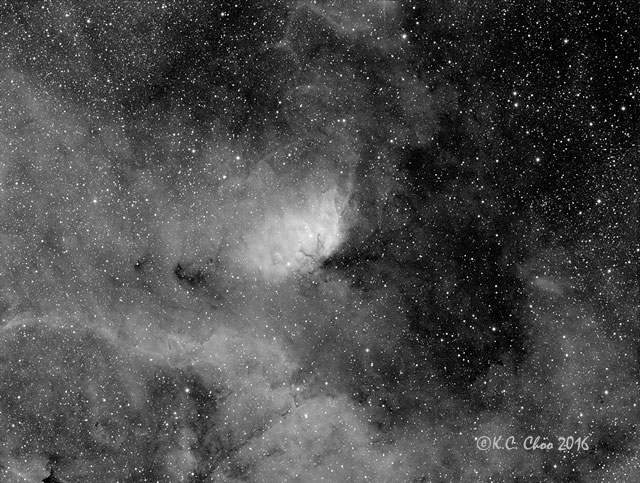
Just about 6,000 light-years away in Cygnus, this area of nebulosity is huge and what is shown here is merely a very tiny portion of the whole. I have focussed my attention on the bright object that very much resembles a tulip flower. The Crescent Nebula, shown above, is close by. Again, it has taken 4.5 hours of 30 minute subframes to produce this image.
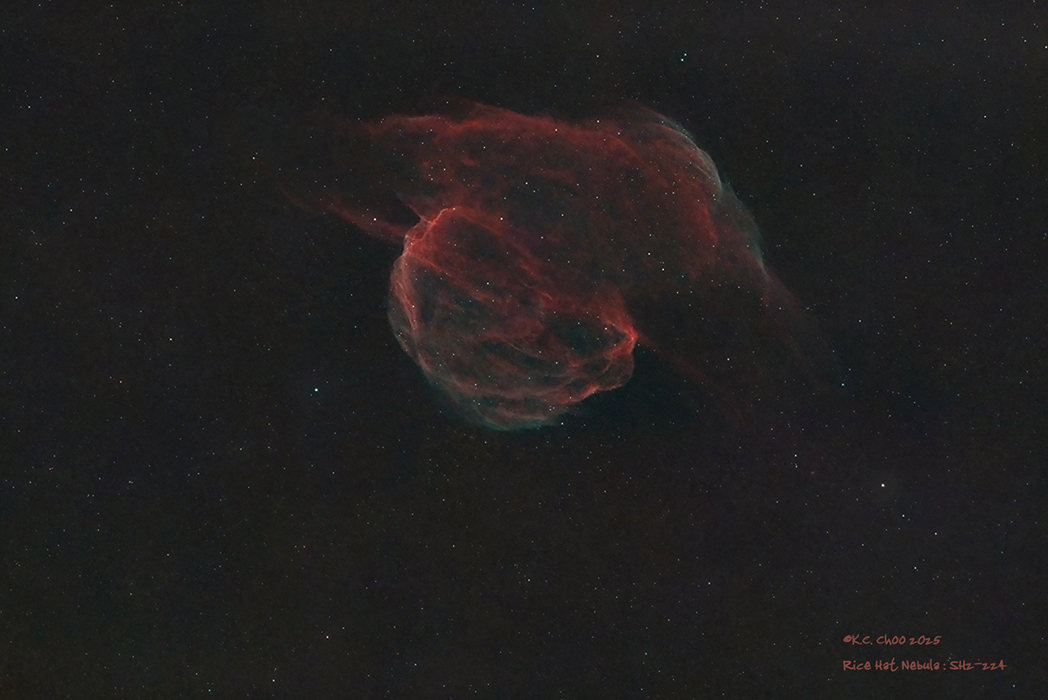
This Supernova remnant, about 14,700 light years away, has been one of my difficult projects. It is a very faint object and data was captured in late January, 2025 over 5 consecutive nights. I was fortunate to have had a run of clear skies. This image is the result of an integration of about 30 hours and 40 minutes of exposure.
Askar PHQ65 refractor, ZWO ASI2600MC camera, AM5 mount, processed in Pixinsight and Adobe Photoshop 2025
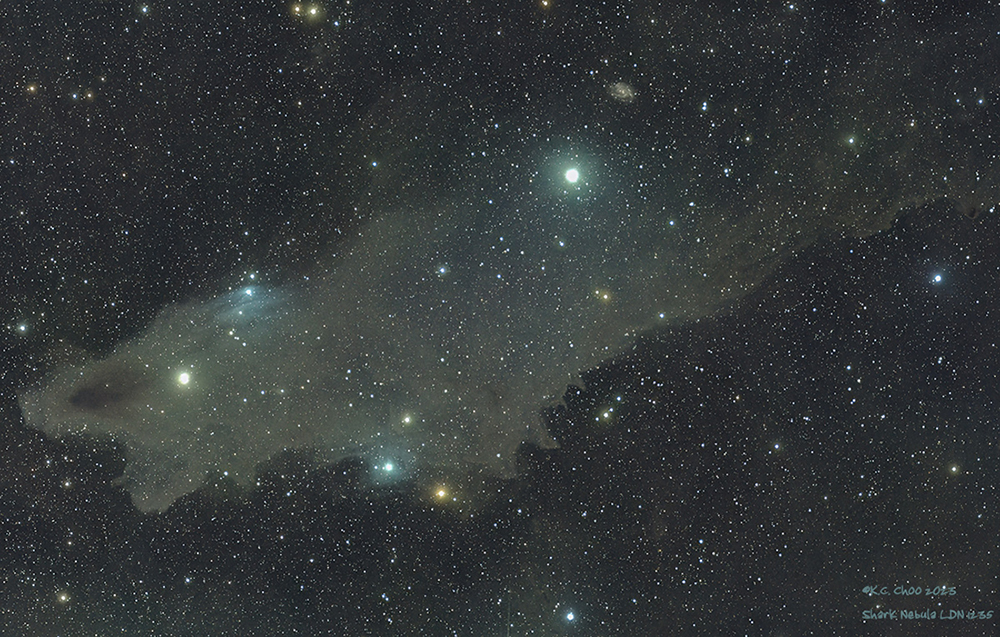
One of my most ambitious, but satisfying, deep sky objects is this Shark Nebula lying some 650 light years away, spanning some 15 light years across. It is a Dark Nebula composed of interstellar dust. This image is an integration of just over 11 hours of data capture over several nights,
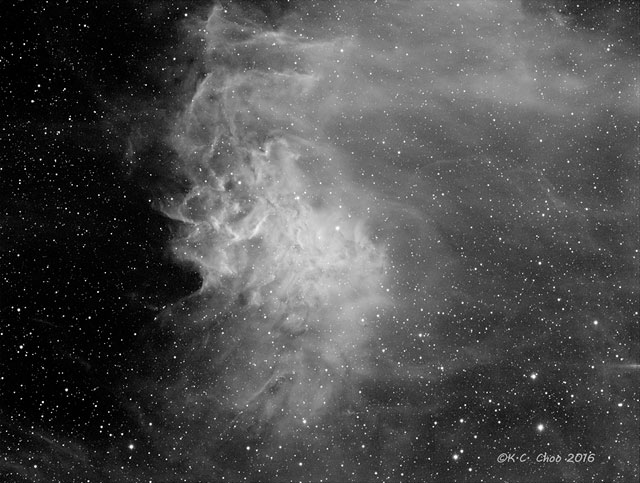
Lying about 1,500 light years away, this bright nebula is a fine example of an emission/reflection nebula. In colour, the illumination star, AE Aurigae located exactly in the middle of the frame, is seen to be in flames as it moves through a region of gas and dust. Again, this Ha filtered image is an integration of 8 x 1800 seconds sub-frames.
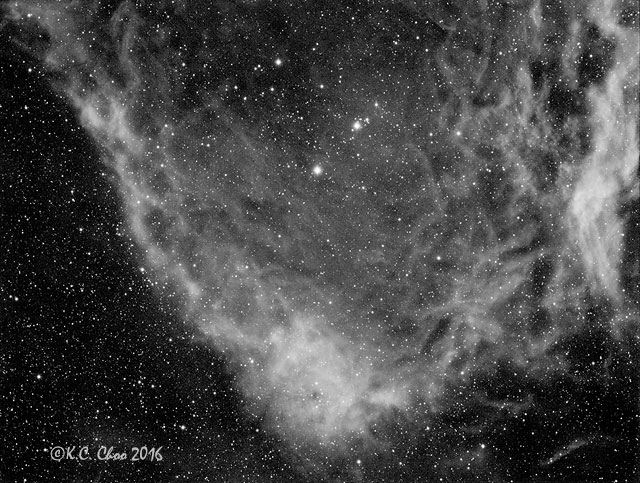
What is seen here is only a small region of vast Hydrogen emission and other emission gasses. Look carefully and you will 'see' the right ear, two eyes and nostril of "the Bat" flying with its two wings in an upward 'V' formation. What is really intriguing about this is that only in 2011 did an amateur astrophographer, Nicolas Outters, discover a Giant Squid apparition (now named Ou4), the centre of which is at the higher right bright star. This will only be visible through many hours (10 hours
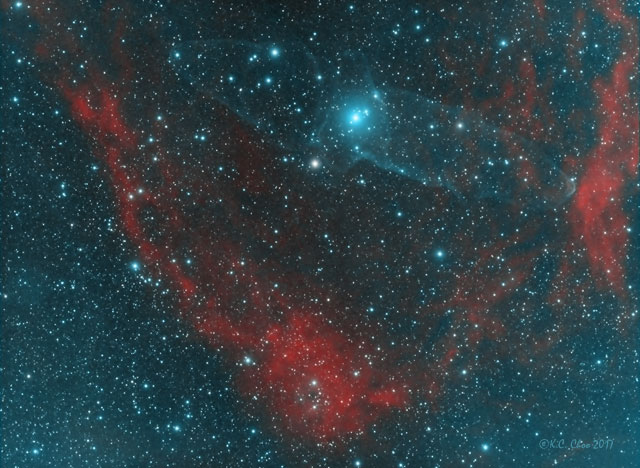
In August 2017 I was able to capture 17.5 hours of exposure (30 minutes each) through an Oxygen III Narrowband filter over 7 nights to add to the Ha data above. This is a RGB integration where I have assigned the Ha data to the Red Channel and the OIII data to the Green and Blue Channels, a standard procedure. Processing was accomplished with Pixinsight, a dedicated astrophotography software. I am really surprised that I managed to get this from home.
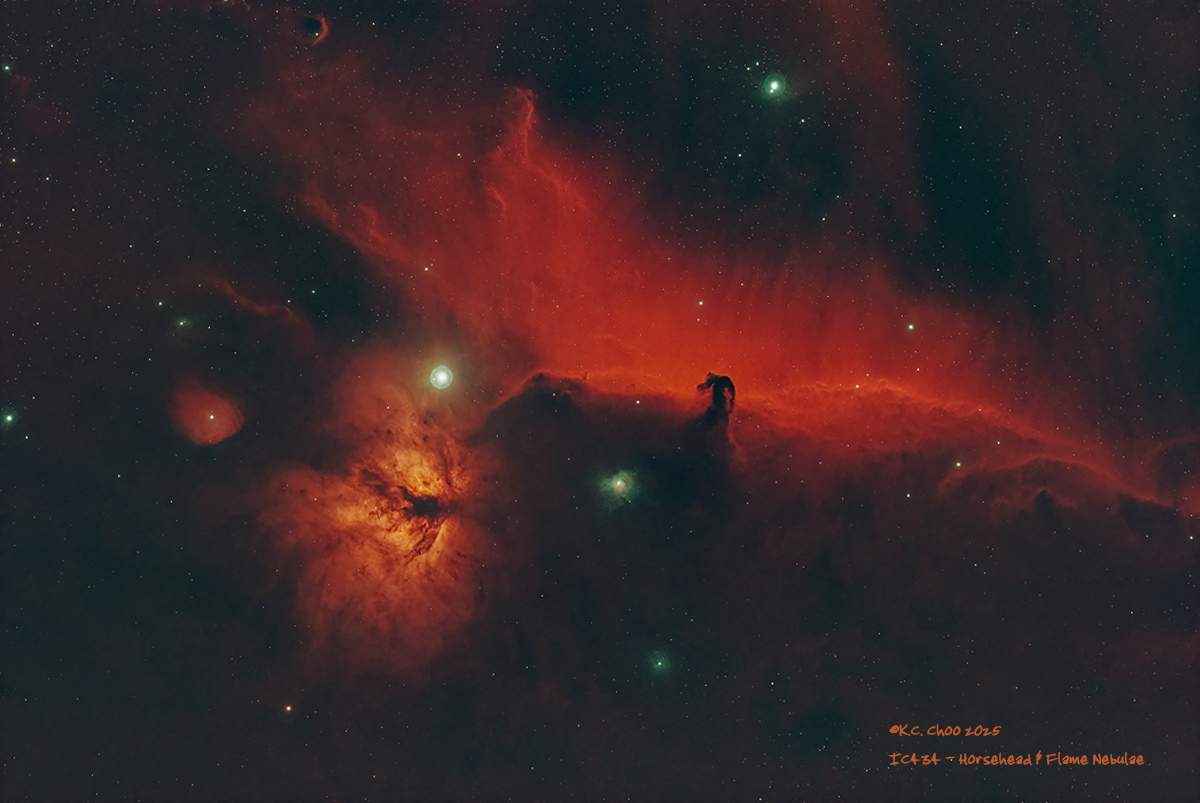
Ever since I first saw a photograph of the beautiful Horsehead and Flame Nebulae in the Constellation Orion, I yearned to photograph it. Here my field of view from the Stellarvue SVQ100 refractor telescope and camera includes the Flame Nebula on the left. It is without question the most imaged deep sky object. The brightest star that the Horse appears to be peering at is Alnitak, one of the three stars that form Orion the Hunter's belt. What a magnificent area with so much nebulosity.
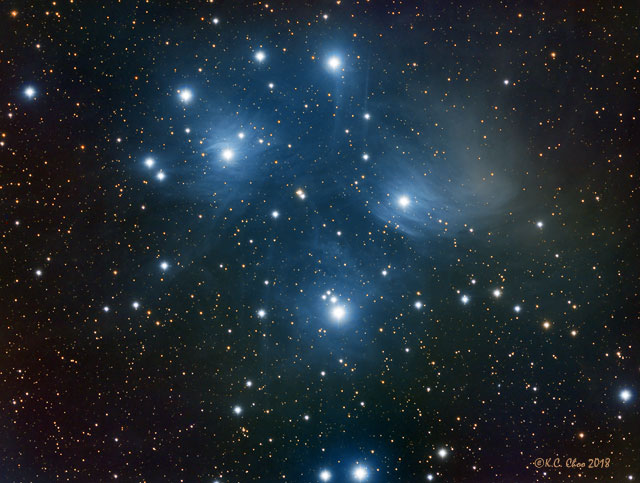
Perhaps the most famous of all the open star clusters in our northern sky because we can see this with our naked eye. What is not so evident, even with binoculars, is the reflection nebulosity and dust which show when photographed. It is close to us being just over 400 light-years away.
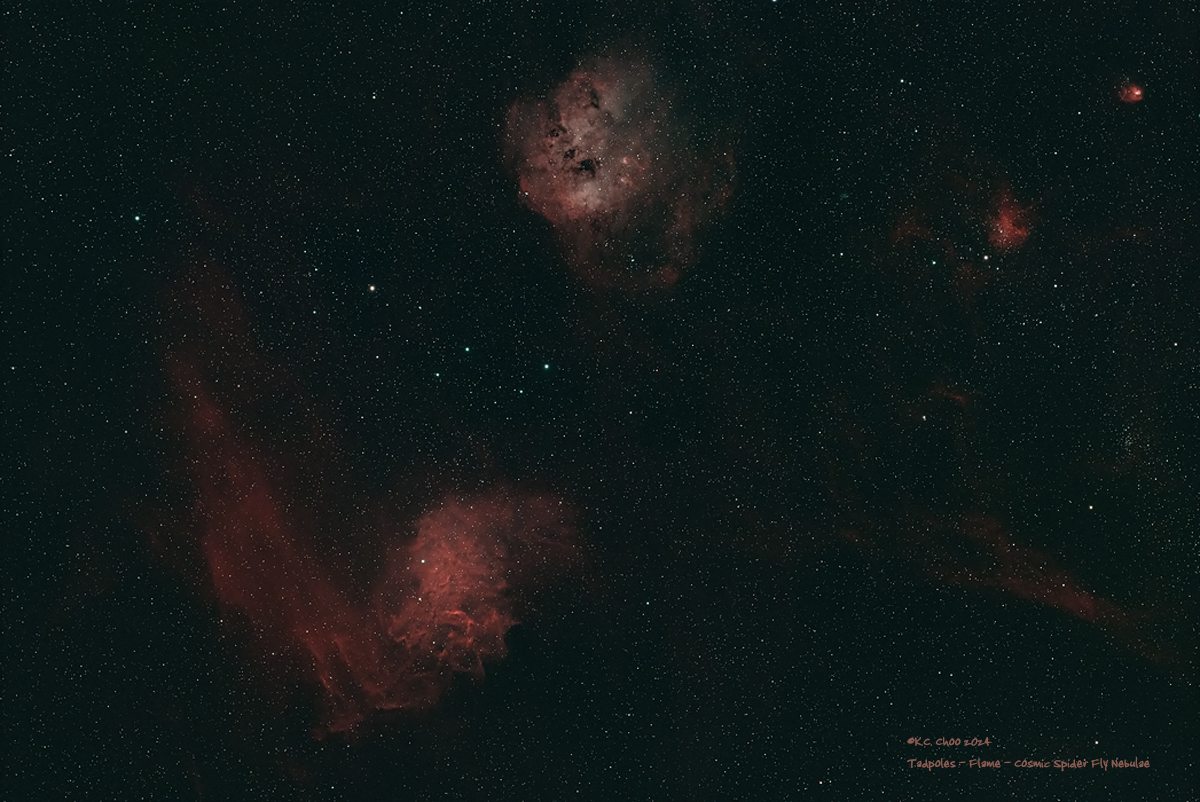
I have really enjoyed the Askar PHQ65 wide-field refractor, being able to combine Deep Sky Objects that are relatively close to each other, without the need to create a Mosaic. This is a fine example of these two 'neighbours' in the Auriga Constellation some 1500 light years away.
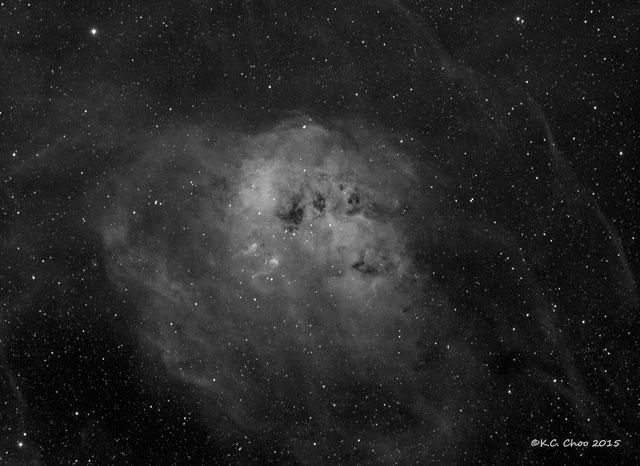
At about 12,000 light-yeasrs away, this nebula is quite faint but the Ha filter has enabled me to capture a lot of detail, particularly that of the two "tadpoles". I am constantly amazed by the similarity in the heavens of living things that we are so familiar with on Earth.
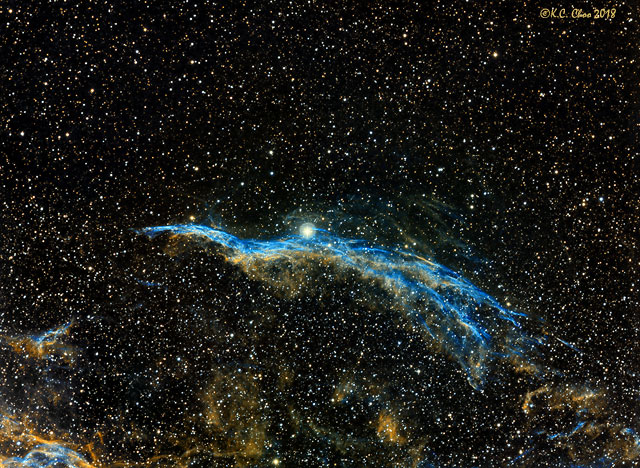
This is the western side of the Great Cygnus Loop, which is believed to be the remnants of a supernova explosion about 7,500 years ago. That bright star is known as Cygni 52. The distance of the nebula is about 2,000 light-years. The gold and blue false colours is the result of combiniung Hydrogen, Oxygen and Sulphur filters and processing using the Hubble Palette.
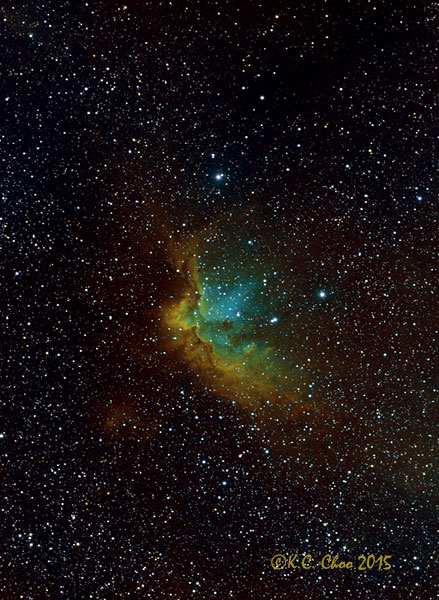
Located in Cepheus some 7,200 light years away, here shown in classic Hubble Palette assigning the Sulphur II data to the Red channel, Hydrogen alpha to the Green channel and Oxygen III to the Blue channel and resulting in the typical gold and blue colour combinations.
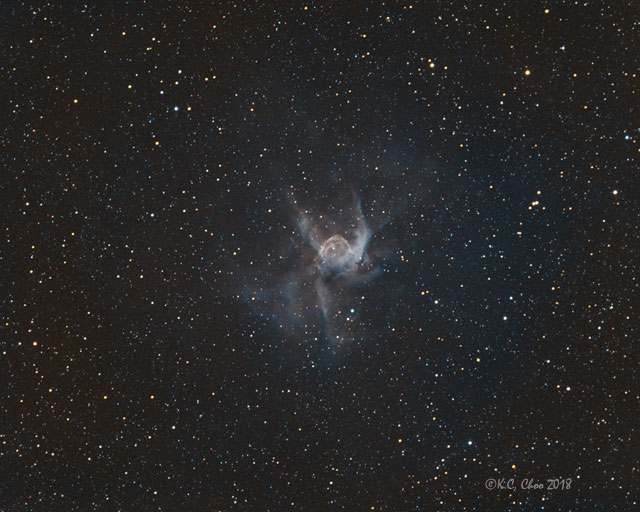
I am particularly happy with this one because it is quite low to the horizon from my location, and it faces south directly over our city lights. This is an integration of data captured using Hydrogen Alpha and Oxygen III filters, processed by assigning the Ha to the Red Channel, and the OIII filter to the Green and Blue Channels. The bright star in the middle of Thor is catalogued as GSC 5407-3417 and is a massive giant in a pre-supernova stage. Apparently, these Wolf-Rayet stars are very rare a